
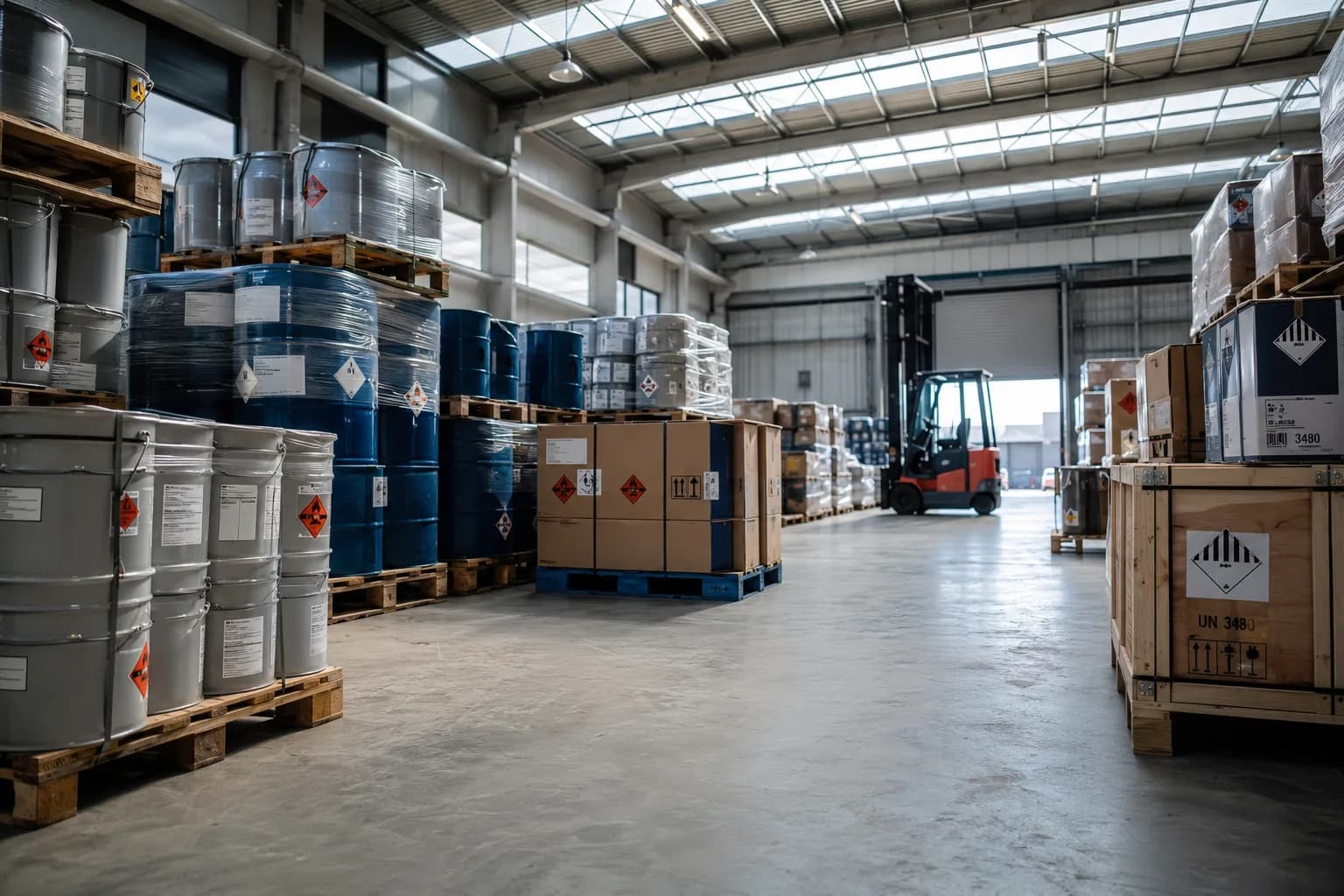
Not every export shipment consists of machinery, spare parts or consumer goods.
Many African importers purchase industrial paints, chemical products, lithium batteries, aerosols and other regulated goods from German manufacturers and suppliers. The biggest challenge usually begins long before the cargo reaches the port.
Incomplete documentation, incorrect packaging or an inaccurate dangerous goods classification can delay a shipment, lead to carrier rejection or generate unnecessary costs.
Why dangerous goods require special handling
German manufacturers and distributors focus on producing and supplying their products. Managing an international export operation is usually outside their scope.
In most cases, they will not:
- store your goods for several weeks while waiting for additional deliveries;
- consolidate shipments from multiple suppliers;
- adapt export documentation to your destination country's requirements;
- verify dangerous goods acceptance requirements with shipping lines;
- coordinate the entire export process from their warehouse to the port.
For importers in Lagos, Accra, Douala or Dakar, this is often where the real challenge begins.
Several suppliers must be coordinated, deliveries need to be combined, and the export process has to be managed remotely.
An experienced logistics hub brings all of these activities together under one roof.
What qualifies as dangerous goods?
Many everyday industrial products are classified as dangerous goods for transport purposes.
These include, among others:
- certain paints and coatings;
- solvents;
- adhesives;
- chemical products;
- lithium batteries;
- aerosols.
Depending on their classification, these products may require specific packaging, labelling, documentation and carrier approval before they can be transported.
These requirements are not administrative formalities. They determine whether the shipment can be accepted for transport.
Importers do not need to become dangerous goods specialists themselves. What matters is working with a logistics partner who understands the applicable regulations and identifies potential issues before the shipment reaches the terminal.
What does a logistics hub actually do?
A professional export hub provides far more than warehouse space.
Its responsibilities typically include:
- receiving cargo from your German suppliers;
- inspecting incoming deliveries and providing photo confirmation;
- storing goods until every shipment has arrived;
- coordinating export documentation and dangerous goods requirements;
- preparing cargo for the appropriate mode of transport;
- supplying your freight forwarder or customs broker with the required documentation.
Storage and export preparation go hand in hand.
A competitive ocean freight rate offers little value if the shipment encounters avoidable problems before it even reaches the port.
A practical example
We regularly support importers purchasing industrial products from several German suppliers.
A typical example involves multiple pallets of industrial paint delivered to our warehouse over several days or weeks. Once every delivery has arrived, the cargo is inspected, documented and prepared for export in accordance with the applicable transport requirements.
The same process is common in the construction sector, where adhesives, coatings and technical products are supplied by different manufacturers and consolidated into one coordinated export shipment.
Instead of managing multiple partial exports, the importer receives one organised shipment.
Questions worth asking before you choose a logistics partner
Before placing an order, make sure your logistics provider can answer the following questions clearly:
- Can you receive deliveries from multiple German suppliers?
- Do you confirm every delivery with photographs?
- Can you store cargo until the full order has arrived?
- Are storage, handling and shipping costs clearly itemised?
- Do you have experience handling similar dangerous goods?
- Who prepares the export documents for my freight forwarder?
Clear answers to these questions make planning significantly easier and reduce the risk of unexpected costs later.
Don't overlook import requirements
Export procedures in Germany are only one part of the supply chain.
Your destination country may require additional import permits, certificates or specific product labelling before the cargo can be cleared.
These requirements should be confirmed with your customs broker or freight forwarder before the shipment leaves Germany.
A logistics hub can prepare your cargo correctly for export, but import compliance remains equally important.
Conclusion
When exporting regulated goods, choosing a logistics partner should never be based solely on the ocean freight rate.
The priority is ensuring that your cargo is properly received, stored, documented and prepared before it leaves Germany.
Well-organised export preparation reduces delays, avoids unnecessary costs and creates a smoother import process once the shipment reaches its destination.
Planning to export dangerous goods from Germany?
MTN Logistics supports businesses with cargo reception, temporary storage, export preparation and international shipping for regulated goods.
Tell us what products you are shipping, the estimated volume and your destination port.
We'll review your requirements and provide a transparent quotation covering storage, handling and export services before your shipment begins.